
Another way driving is getting pricier
(4min read) And are Uber and Waymo on the rocks?

Welcome to CoMotion NEWS, your weekly roundup of news and analysis of the mobility revolution. If this email was forwarded, you can sign up here for NEWS.
Today we’ve got bad news about cars. They’re getting more expensive to drive. Even the ones that don’t run on gas are getting hit with increased material costs linked to the Iran War. Meanwhile, autonomous cars are running into regulatory pushback in China and almost running into buses in San Francisco (but not Austin, despite what Elon Musk claims). What is bad for cars is usually good for public transit, unless of course it is gas-powered, which it sadly often the case. On the bright side, our friends at it’s electric are partnering with the city of Philadelphia to provide 1,000 curbside chargers, a game-changer for a dense city where public chargers are the only way most people can make EVs work.
What you need to know
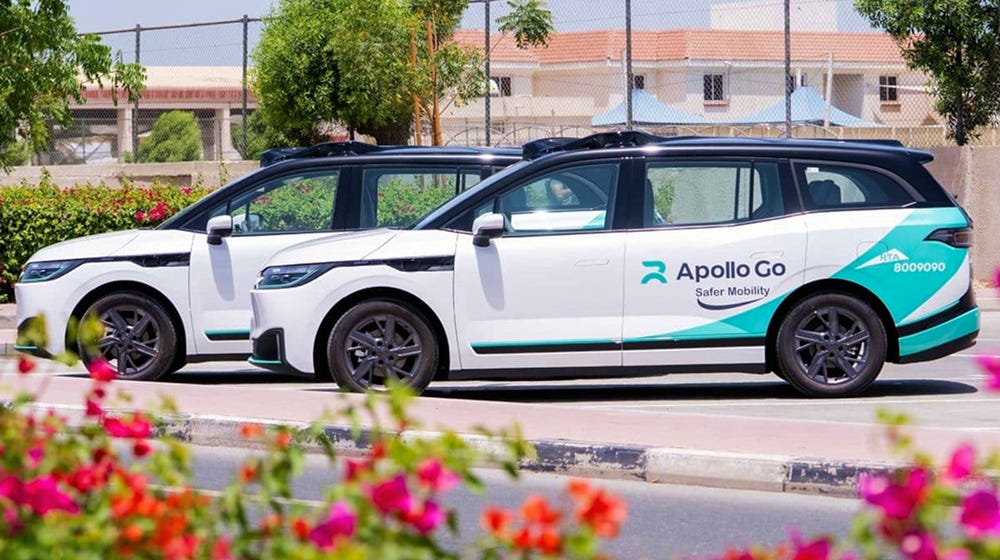
China suspends autonomous driving permits: China is not issuing any more licenses for autonomous vehicles in the wake of a troubling incident involving robotaxis operated by Chinese tech giant Baidu. In March a power outage prompted more than 100 Baidu robotaxis in Wuhan to suddenly halt, leaving customers stranded, in some cases unable to exit the vehicles, for hours. Baidu’s Wuhan operations have been suspended, but other existing robotaxi services in China, including Pony.ai and WeRide, are still running. They are not allowed to add new vehicles to their fleets though. We’ll see how long this pause lasts, but it could have the unintended effect of further entrenching the incumbents.
Philly’s new curbside charging deal: Philadelphia signs a deal with it’s electric, an EV charging startup, to provide 1,000 Level 2 curbside chargers across the City of Brotherly Love. In a city where more than 60% of residents don’t have off-street parking, abundant curbside chargers are a must to achieve widespread EV adoption.
Musk tells a tall tale about Waymo: Elon Musk suggests in an earnings call that Tesla isn’t hesitating to expand its robotaxi service out of safety concerns, but rather because the Tesla Robotaxis are currently too risk-averse. In making his case, he claimed that a Waymo in Austin recently crashed into a bus and that “a dozen or more Tesla Robotaxis” were stranded in a left turn late, unwilling to simply go around the collision in the middle of the intersection out of an abundance of caution. The problem is that there does not appear to be any evidence that the alleged Waymo-bus collision took place. It also seems unlikely that roughly a quarter of Tesla’s entire Austin fleet was in the same left turn lane at the same time.
In the latest episode of Mobility Matters, host Javier Betancourt sits down with John Rossant, Founder & CEO of CoMotion, recorded live at CoMotion MIAMI ‘26. They move past the buzzwords to tackle the industry’s most pressing questions:
How AI is dominating everything: will it be the key to ending gridlock, or will it actually put more cars on the road?
How cities can use Mega Events to build a lasting public transit legacy.
The effervescence of Miami and why the city has become a global proving ground for transportation innovation.
Are Uber and Waymo on the rocks? Uber CTO Praveen Neppalli posts a video on X of a Waymo in San Francisco. The vehicle, he say, “overtook a Muni bus in the wrong lane at a signal, didn’t stop, and aggressively tried to squeeze between me and the bus. Had the bus driver and I not steered away, this could have been a serious incident.” He added, “Big fan of AVs, but perception ≠ judgment. Edge cases matter!” The tweet is surprising to Harry Campbell, founder of The Driverless Digest, given that Waymo and Uber are collaborators. He wonders if it signals some “underlying tension” between the companies.
The other way driving is getting more expensive: As gas prices surge to a four-year high, automakers also say the Iran War is substantially raising the cost of aluminum and other key commodities. Gerrit Reepmeyer, partner at consultancy AlixPartners, tells the Financial Times it could add between $500 and $1,500 to the cost of a car. That’s assuming things don’t get worse, of course.
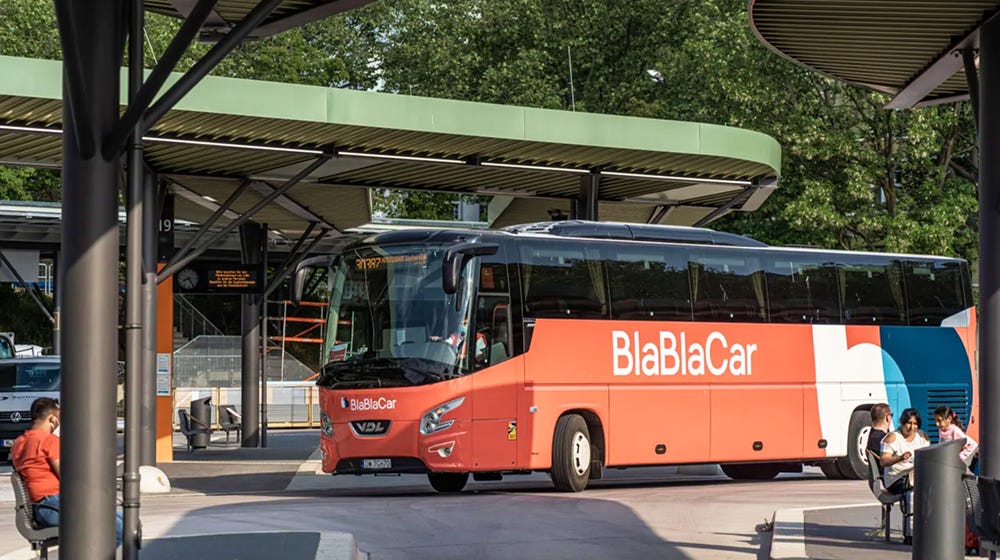
Buses gotta buy gas too: As people logically respond to skyrocketing gas prices by opting for public transit, it’s important to remember that many bus services are also hurting for the same reason. Case in point: a popular French intercity bus service, Blablacar Bus, which transports 6 million people around the country a year, is shutting down in part due to high diesel prices. It’s not yet clear what effect fuel prices will have on U.S. transit agencies, but it’s a painful reminder that the transition to EV buses is not going nearly as well as hoped.
What we’re reading
Hungry for food & transit: The Guardian takes a look at how people without cars make do in parts of the U.S. without robust transit service (most of the country). Sadly, places without decent transit also tend to have a dearth of other essentials, notably grocery stores, forcing car-free residents to spend hours waiting for buses or to spend heavily on ride-hail services.
CoMotion's mobility goodness brought to you by:
Jack Craver,
Editor, CoMotion NEWS
jcraver@comotionglobal.com
Write to us if you would like to suggest content for our next newsletter!
Partner with us
CoMotion GLOBAL in Riyadh, CoMotion LA, CoMotion MIAMI, and the Monaco Hydrogen Alliance offer unparalleled opportunities to grow global awareness in the mobility space. Build influence, elevate your brand, and connect with ground-breaking companies. Let’s collaborate.
“It's really exciting to be at this year's CoMotion, with the best, most creative, and innovative minds together thinking about solutions on how we advance transportation.” - Laura Rubio Cornejo, General Manager, LADOT
Get in touch if you are interested in learning more.
YouTube | LinkedIn | Podcast | X | Instagram